Future Hotel
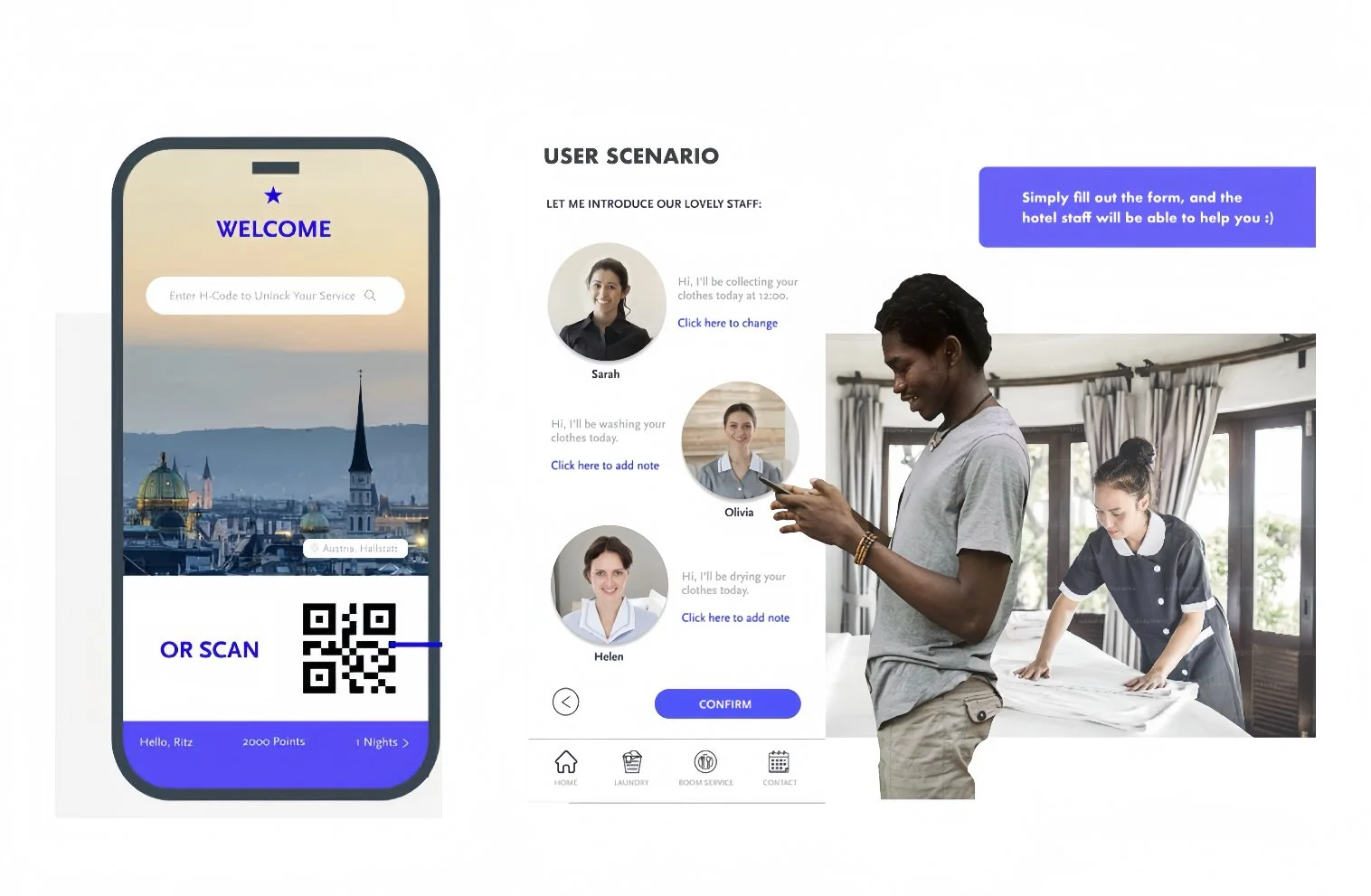
Hotel Service Experience
Service & Experience Design
Hotel laundry services typically rely on paper forms placed in guest rooms, resulting in limited communication between guests and service staff. As a result, much of the service process remains hidden behind the scenes, leaving guests with little visibility into how the service is delivered.
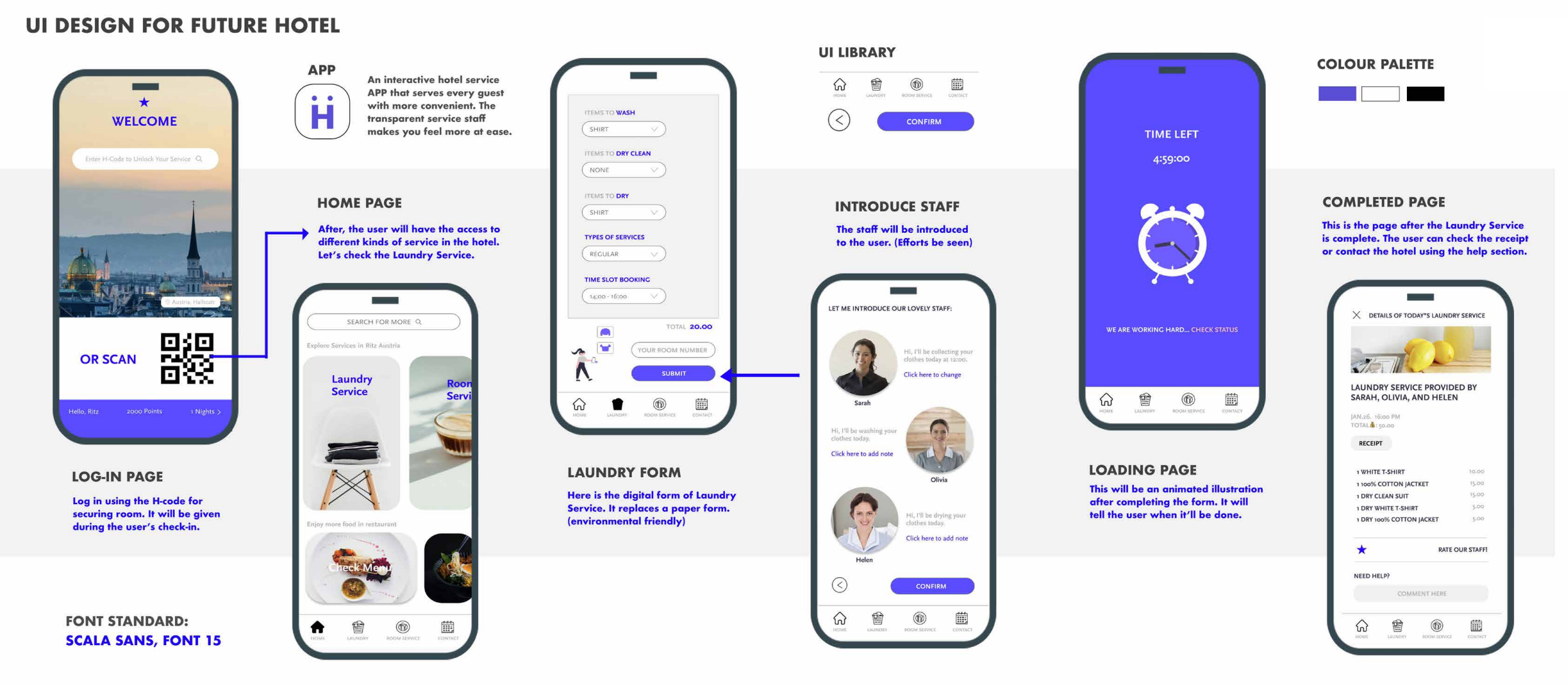
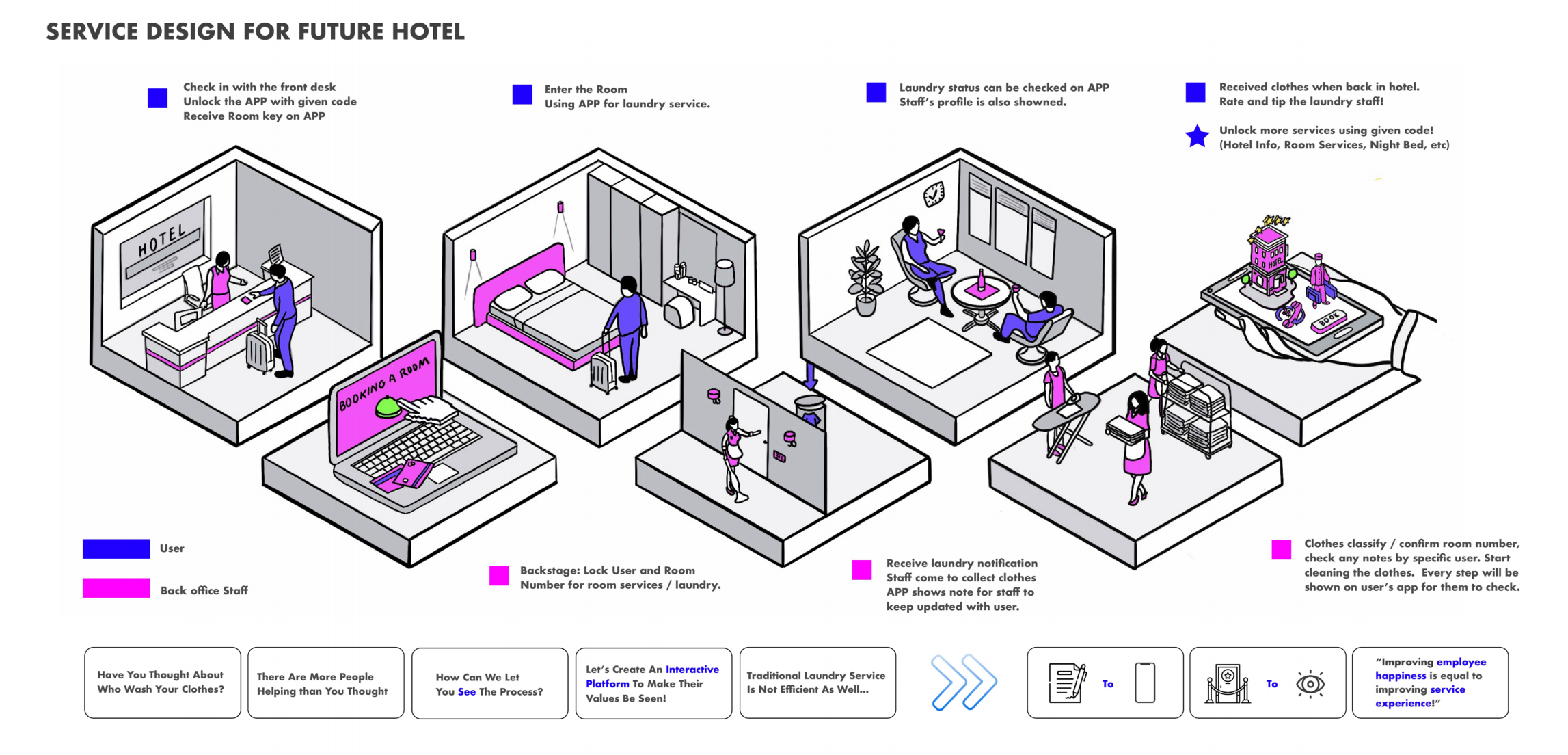
In response, I redesigned the hotel laundry experience as an integrated digital service system that connects guests, service staff, and backstage operations. Through appointment scheduling, service tracking, and a coordinated staff workflow, the system transforms an invisible service process into one that is transparent and perceptible, while also enabling clearer communication and more efficient collaboration for hotel staff.
This project rethinks the value of hotel services. Perhaps what is truly missing is not more functionality, but greater service visibility and stronger connections between people and the services that support them. When backstage labor becomes visible, guests gain a better understanding of the value behind each service interaction, fostering greater trust and appreciation for both hotel staff and the service itself. Through this project, I hope to design more than a better laundry experience, I imagine a hotel service system that makes service visible, recognizes the people behind it.
酒店服务体验应用
服务设计 & 交互设计
酒店洗衣服务通常依赖客房内的纸质表单完成预约,用户与服务人员之间缺乏直接沟通,整个服务过程也始终停留在用户看不到的后台。为此,我重新设计了一套数字化酒店服务系统,将宾客、服务人员与酒店后台流程连接起来。通过预约管理、实时服务追踪以及后台协同机制,让原本不可见的服务过程变得可感知,同时帮助服务人员建立更加清晰、高效的协作流程。
本项目重新思考了酒店服务的价值。也许真正缺失的并非更多功能,而是服务的可见性,以及人与服务之间的连接。当后台劳动能够被看见,用户得以理解每一个服务环节背后的价值,也更容易建立对酒店及服务人员的信任与尊重。通过这个项目,我设计的不只是一次洗衣体验,而是一套让服务被看见、劳动被理解的服务系统。
Design Process 设计流程
01 Problem Discovery
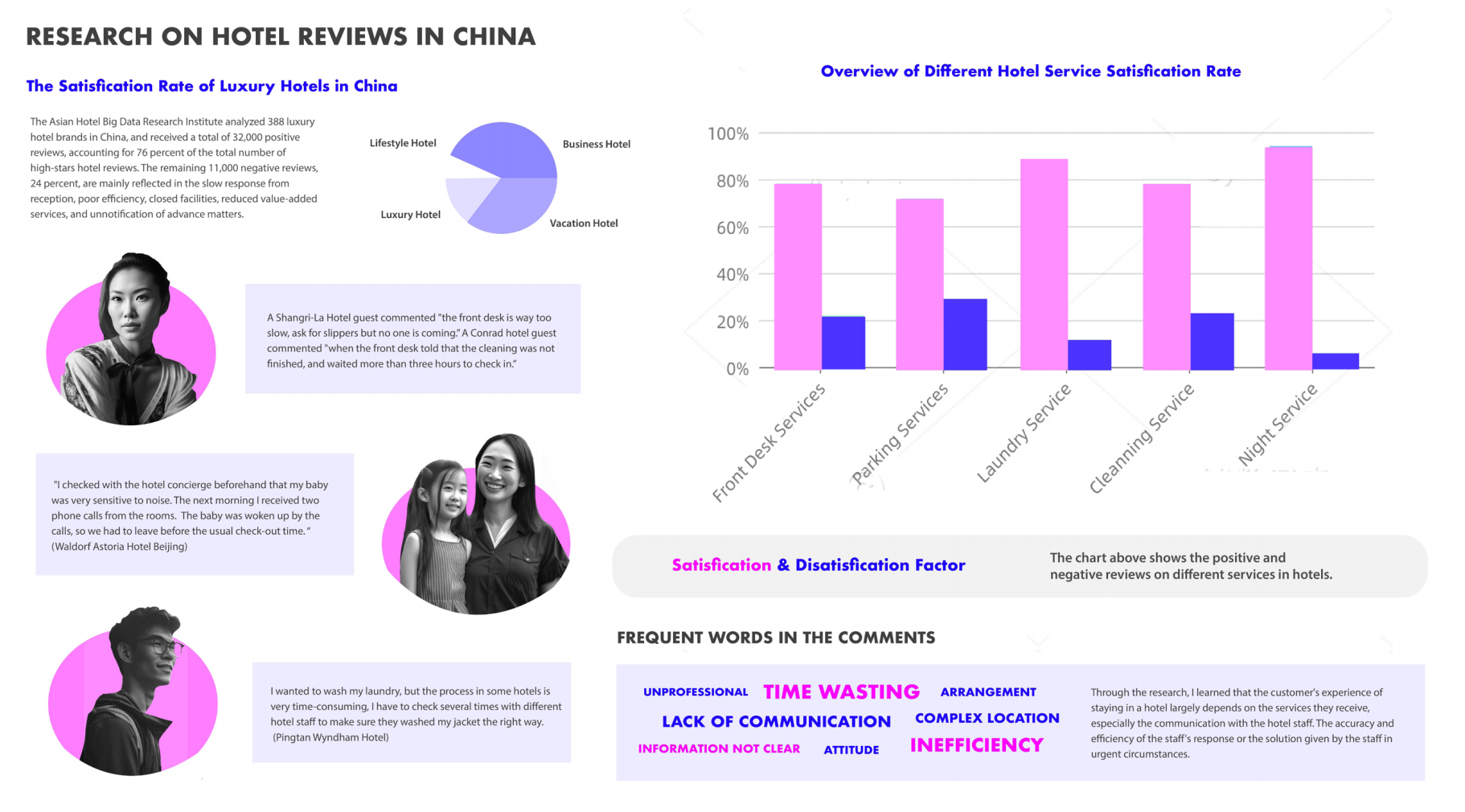
Hotels today invest heavily in creating memorable guest experiences, and customer satisfaction has become a key measure of service quality. As someone who has stayed in many different hotels, I noticed that while public spaces and hospitality continue to evolve, the laundry service is often overlooked and remains surprisingly traditional. Many hotels still rely on paper forms left in guest rooms, which creates indirect communication between guests and service staff. This often leads to limited transparency and an experience that feels disconnected from the rest of the hotel service. This observation led me to explore how hotel laundry services could become more transparent, interactive, and integrated into the overall guest experience.
How might we redesign the hotel laundry experience to build greater trust, transparency, and engagement?
01 发现问题
如今,酒店越来越重视整体入住体验,顾客满意度也成为衡量服务品质的重要指标。作为一名经常入住不同酒店的用户,我发现尽管酒店的大部分服务都在不断升级,但洗衣服务却经常被忽视,仍然沿用传统的纸质表单流程。许多酒店仍然依赖留在客房内的纸质表格,这使得客人与服务人员之间的沟通较为间接。这也会导致信息不透明,宾客体验也与酒店的其他服务脱节。基于此,我开始探索如何让酒店洗衣服务更好地融入整体宾客体验。
我们如何重新设计酒店洗衣服务,让整个流程更加透明,并提升用户的参与感与信任感?
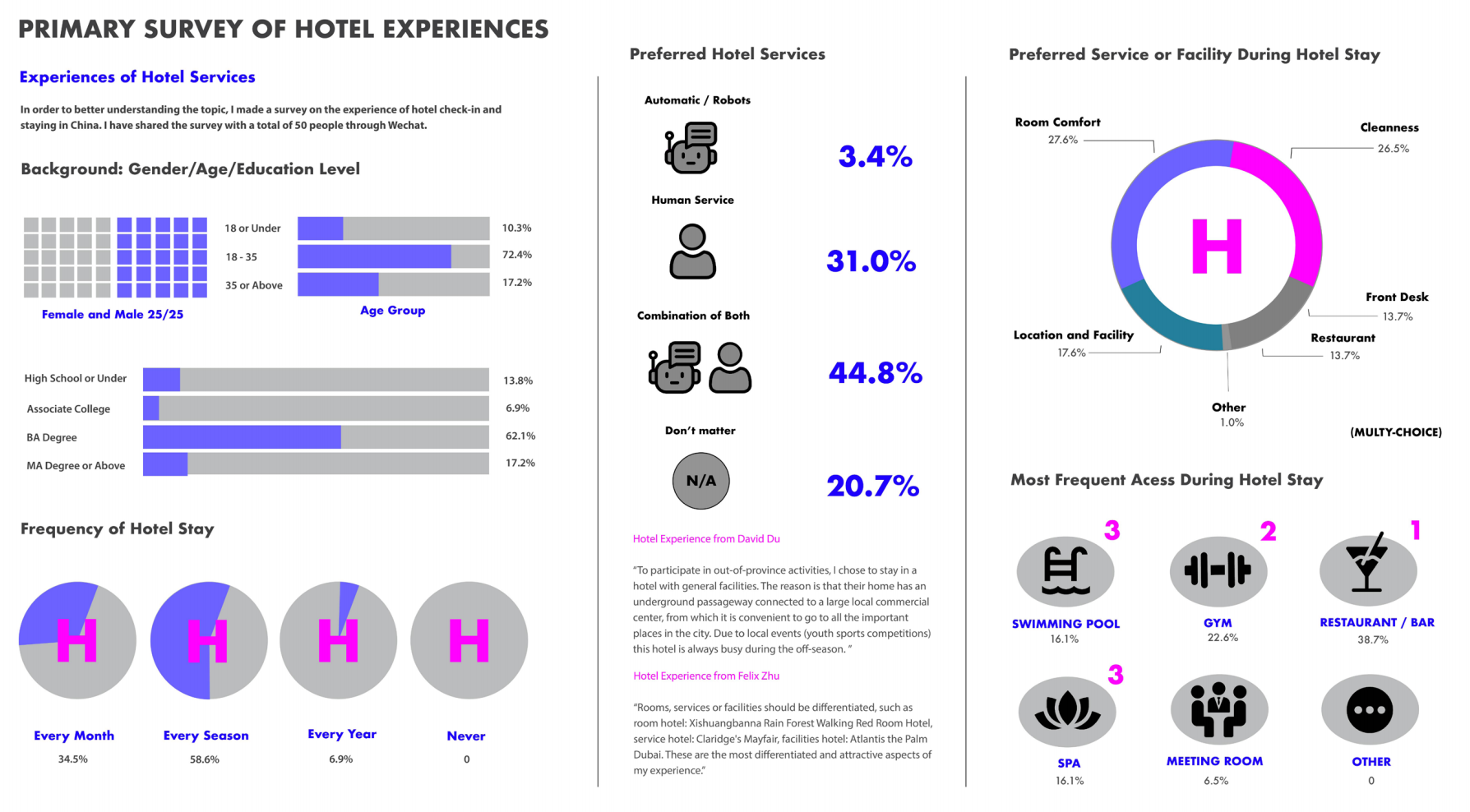
02 Understanding the Service Ecosystem
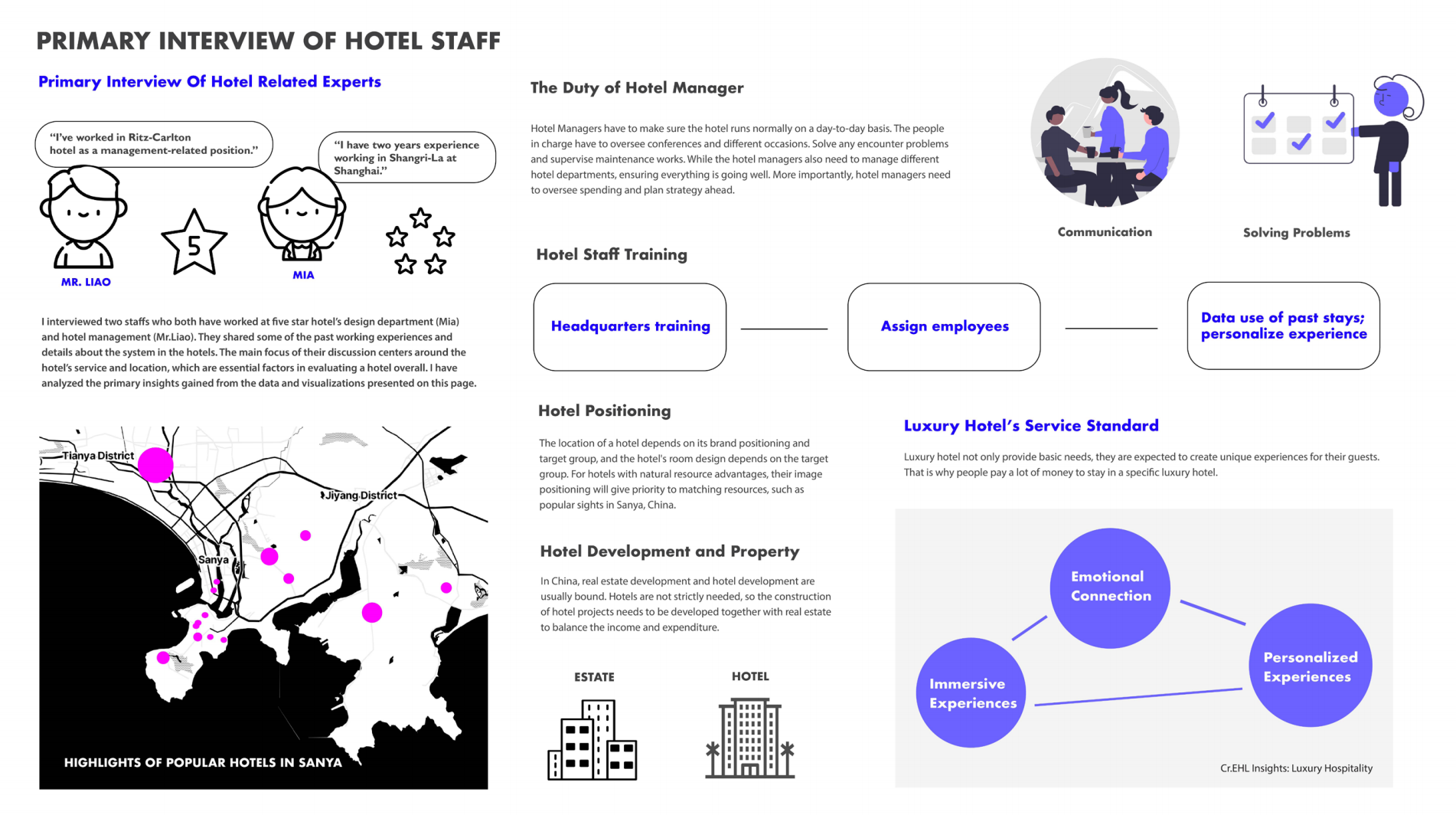
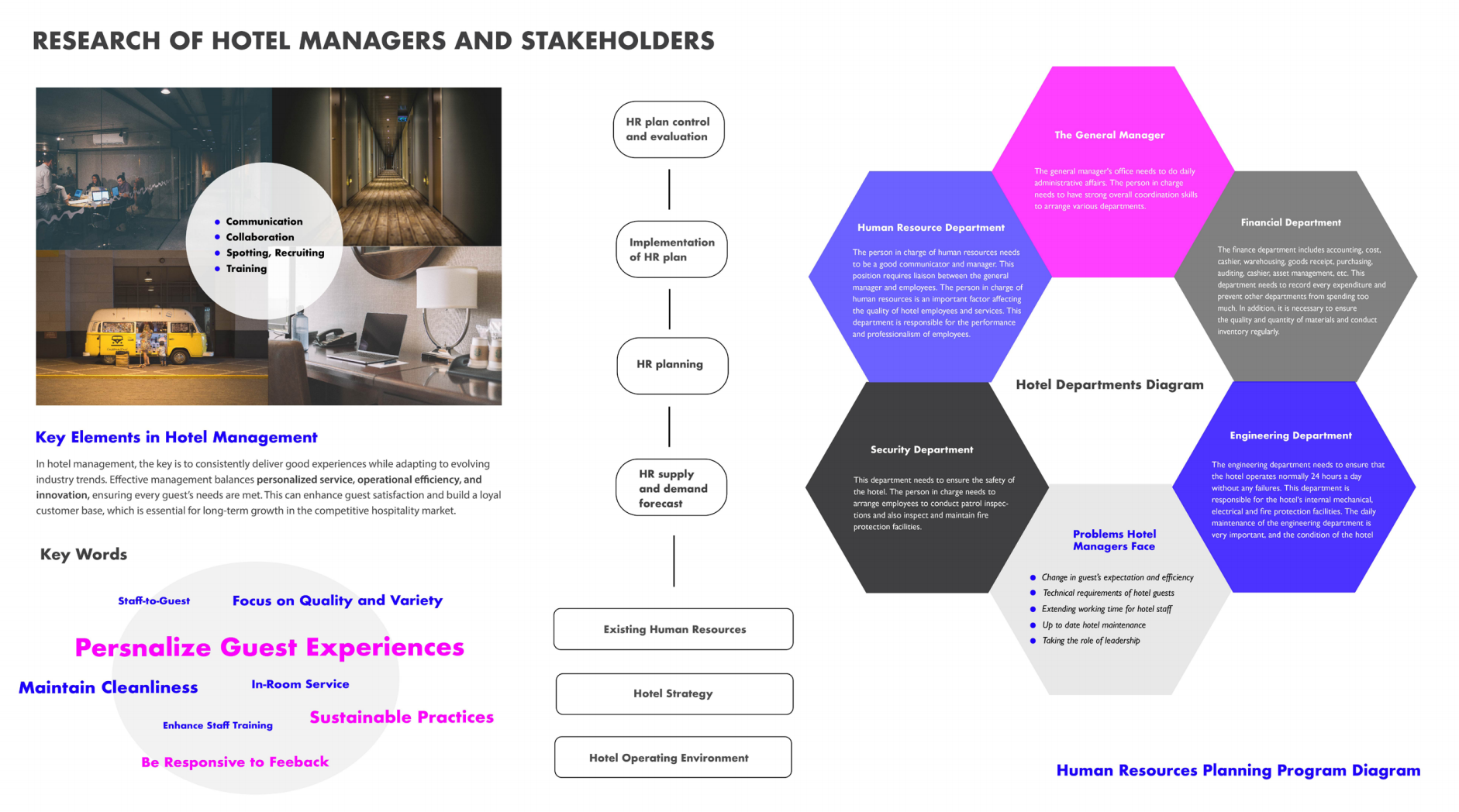
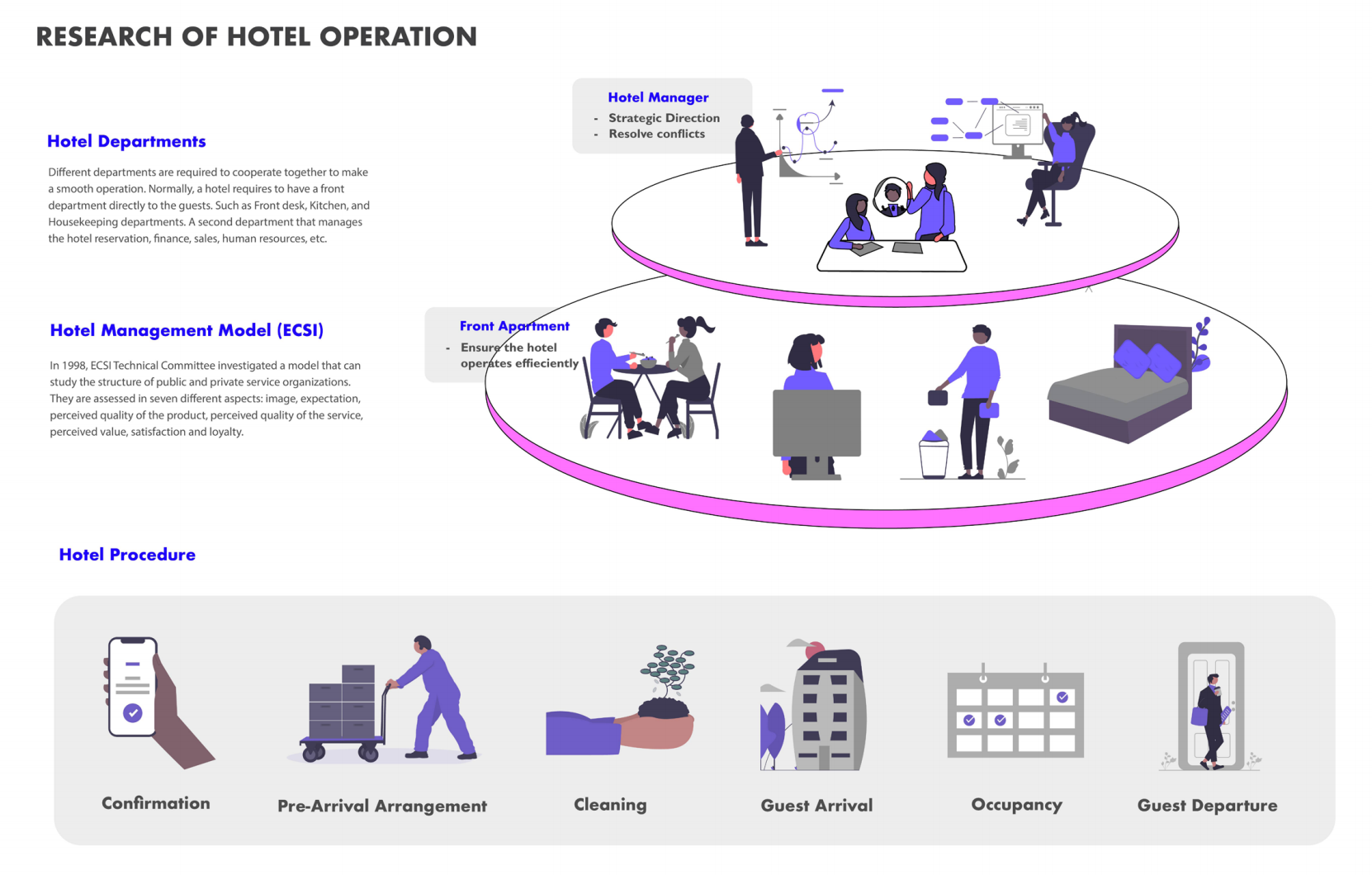
To better understand the problem, I mapped the hotel ecosystem through user research, stakeholder analysis, service observations, and journey mapping. Looking beyond the guest's perspective helped identify the interactions and communication gaps between guests, hotel staff, and service providers.
02 理解服务生态
为了更全面地理解问题,我通过用户调研、利益相关者分析、服务观察以及用户旅程梳理,对整个酒店服务生态进行了研究。不仅关注用户体验,也分析了酒店员工与服务流程之间的协作关系,从而识别出服务中的沟通断点与体验机会。
03 Key Findings
Through my research, I found that hotels have invested heavily in enhancing the frontstage guest experience, while the backstage service experience has remained largely overlooked. The real gap is not a lack of functionality, but a lack of service visibility and meaningful connections between guests and service staff. As backstage operations remain invisible, guests have little understanding of the work and care behind each service interaction, while staff continue to rely on inefficient communication and coordination to deliver the experience.
03 关键发现
调研过程中,我发现酒店一直在不断优化宾客所能直接感知的前台体验,却较少关注后台服务的体验设计。真正缺失的并不是更多的功能,而是服务的可见性以及用户与服务之间的连接。由于后台流程始终处于“不可见”的状态,用户难以理解每一个服务环节背后的价值,也难以感知服务人员的付出;与此同时,服务人员也需要在缺乏有效沟通机制的流程中完成协作。
04 Service Strategy
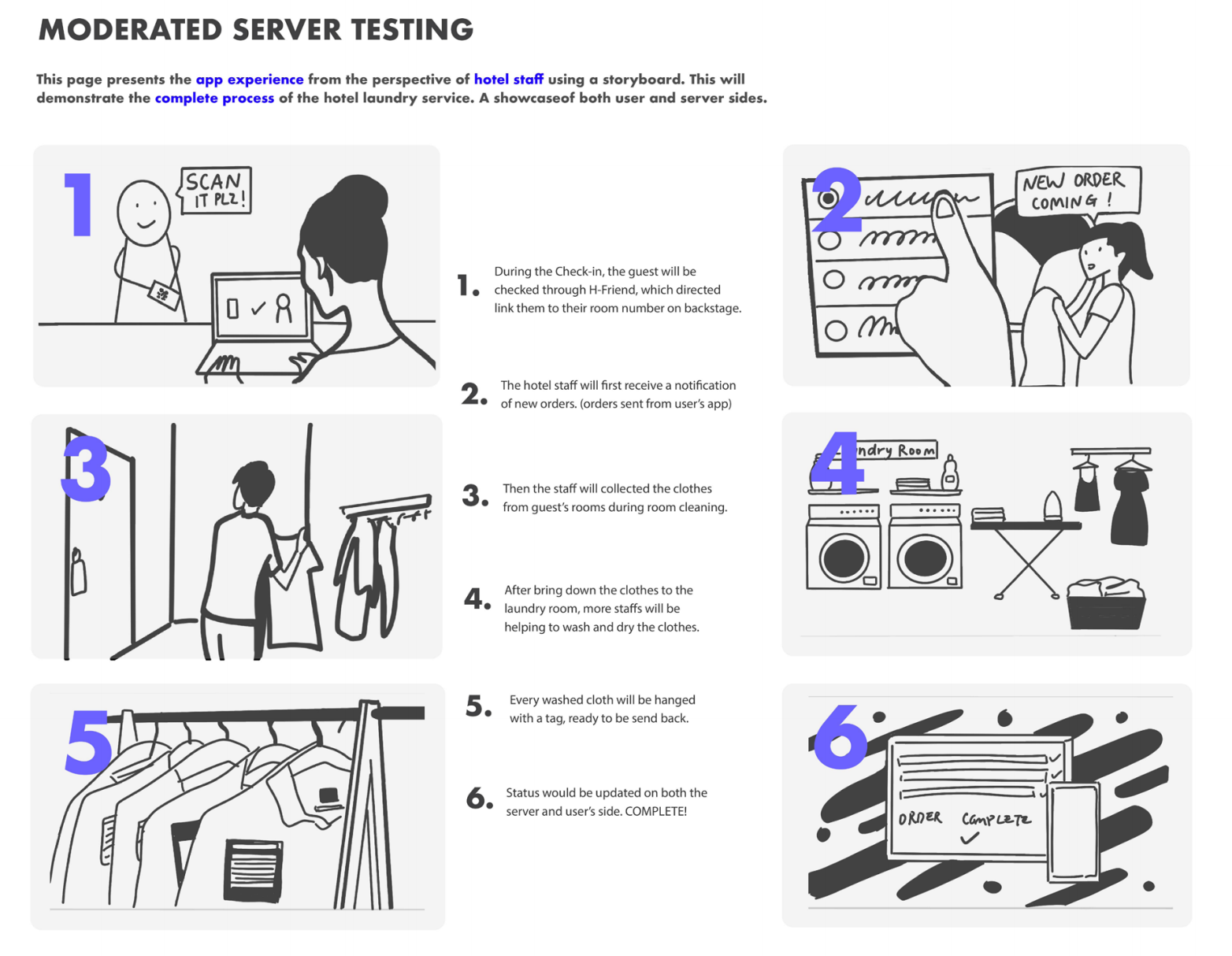
Building on the research insights, I redesigned the hotel laundry service as an integrated digital service system that reconnects guests, service staff, and backstage operations. Beyond enabling scheduling, real-time tracking, and service updates, the system makes previously invisible backstage services visible to guests, transforming service from something hidden into something that can be understood and experienced.
At the same time, the system redesigns staff coordination by connecting operational touchpoints and streamlining communication, reducing friction while improving workflow efficiency.
Rather than focusing solely on operational optimization, the project rethinks the service experience as a whole. My goal was not only to make the service more efficient, but also to make it more visible, to help guests recognize the value behind each interaction while giving greater visibility to the people who make the service possible. When both guests and service staff are better connected through the system, trust, appreciation, and a more human-centered hotel experience naturally emerge.
04 服务策略
基于前期研究,我设计了一套数字化酒店洗衣服务系统,连接宾客、服务人员与酒店后台流程。数字化平台不仅实现了预约、实时进度更新与服务追踪,更重要的是,它将原本隐藏于后台的服务过程呈现给用户,让服务从“不可见”变得“可感知”。与此同时,系统也重新设计了服务人员之间的协作机制,通过整合酒店各服务触点,优化信息流转与任务协调,降低沟通成本,提升整体运营效率。
相比于提升单一环节的效率,本项目更关注整个服务系统的体验设计。我希望让服务不仅被使用,更被理解;让服务人员的劳动不仅被完成,更被看见。当用户能够感知每一个服务环节背后的价值,而服务人员拥有更顺畅的工作体验时,双方共同塑造了更值得信赖、更具温度的酒店服务体验。
05 Moderated User Tests
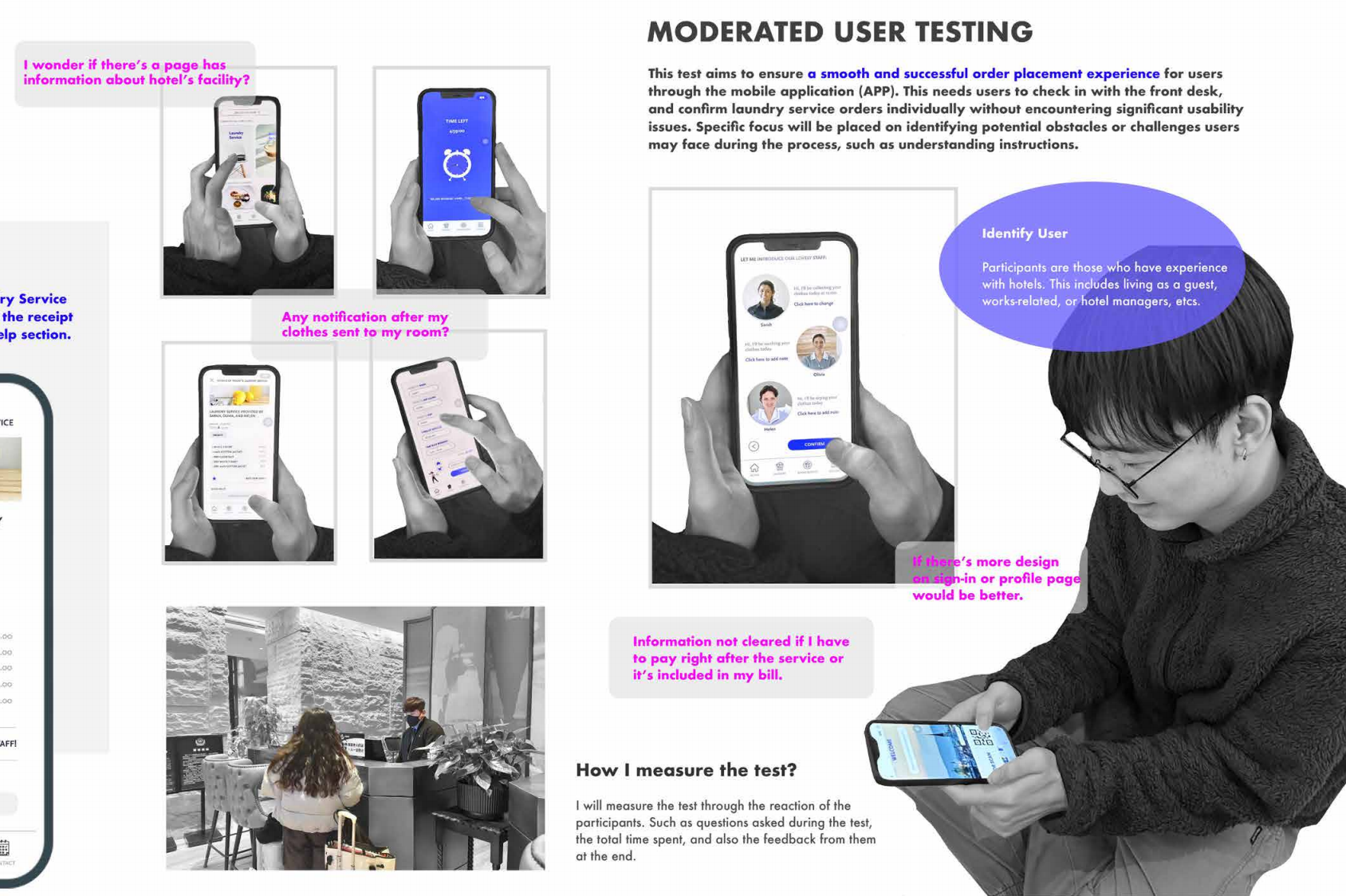
To evaluate the proposed service, I conducted moderated usability tests with participants. Participants interacted with key touchpoints of the system and shared feedback on usability, transparency, and communication. Their insights informed several refinements to the service flow and interaction design, helping create a more intuitive and balanced experience for both users and staff.
05 用户反馈
为了验证方案的可行性,我邀请用户进行了测试。参与者体验了系统的核心服务流程,并围绕操作体验、服务透明度以及沟通效率提出反馈。这些意见进一步帮助我优化了服务流程与交互细节,使整体体验更加自然、顺畅,同时兼顾用户与服务人员的需求。
Reflection
Rather than focusing on optimizing a single product or interface, I began to consider the entire service system, thinking about the relationship between users, service personnel, and operational processes. Through research, testing, and continuous iteration, I understood that design is not just about solving a specific problem, but also about coordinating the relationship between people and services, processes and experiences, and reducing friction within the system. Valuable service experiences are achieved through such a systematic design.
总结
这个项目拓宽了我看待设计问题的视野。相比于优化单一产品或交互界面,我开始从整个服务系统出发,思考用户、服务人员与运营流程之间的关系。通过调研、测试与不断迭代,我理解设计不仅是在解决某一个具体问题,更是在协调人与服务、流程与体验之间的关系,减少系统中的摩擦。有价值的服务体验正是在这样的系统性设计中得以实现。
