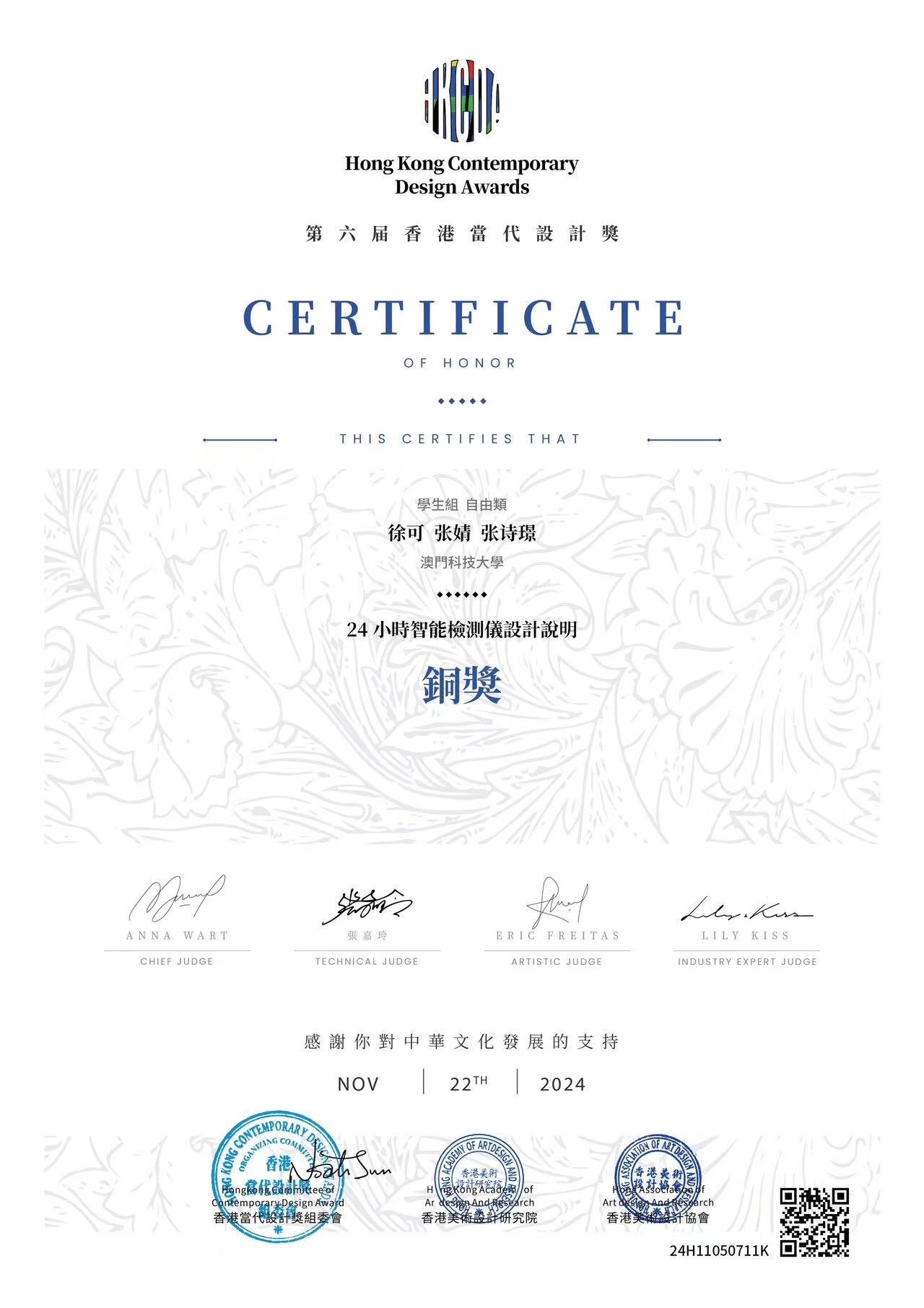
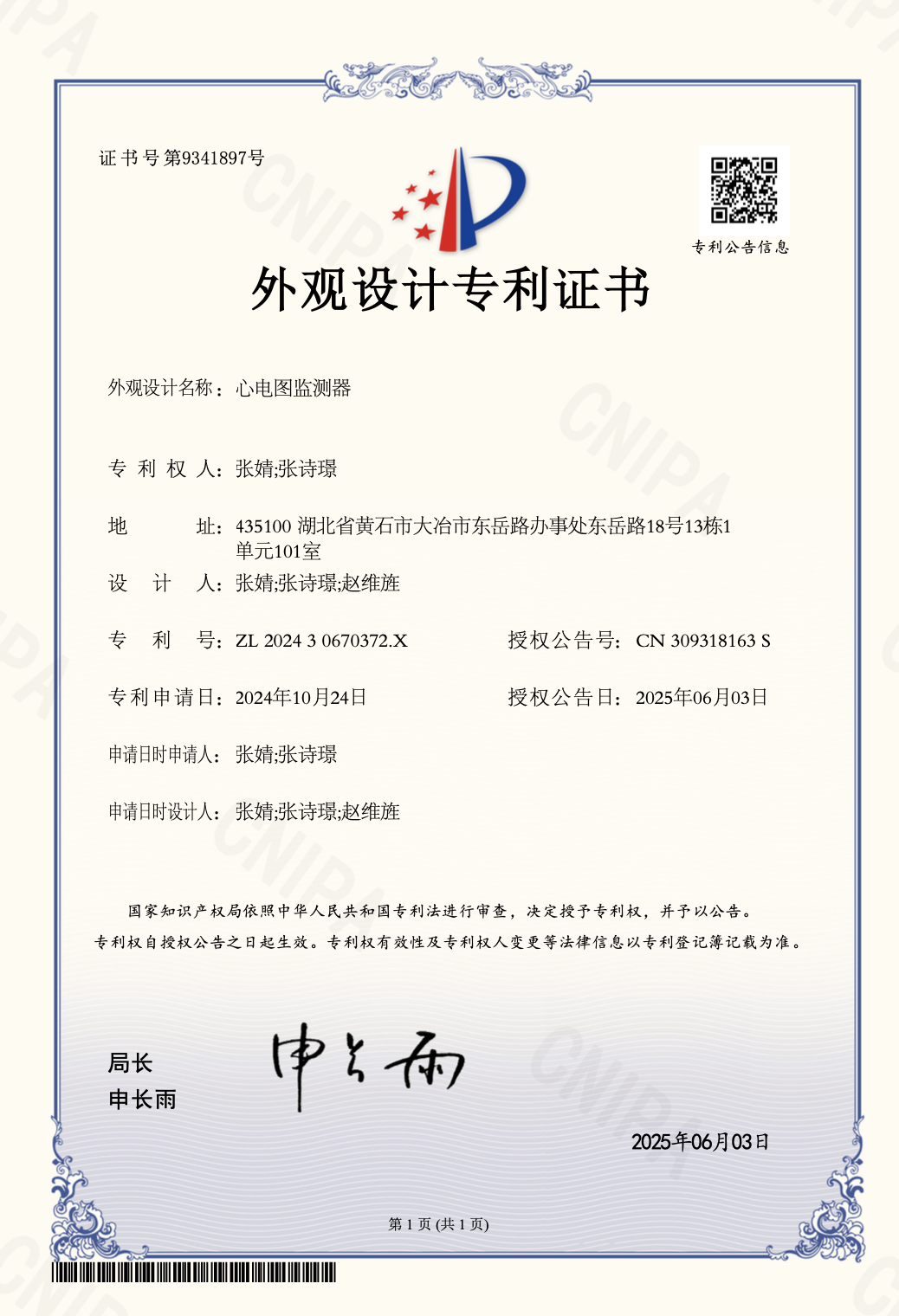
EPM Design Patent (Granted)
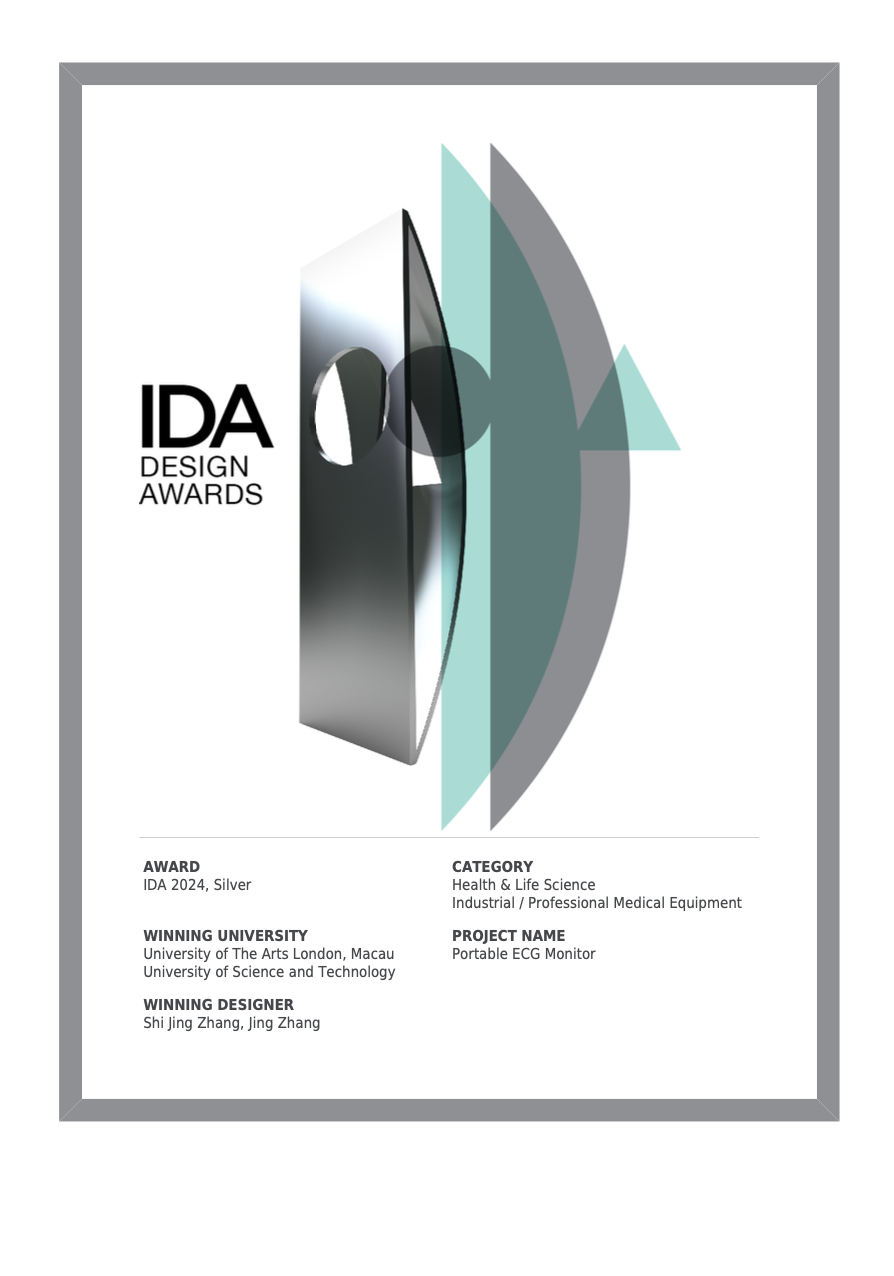
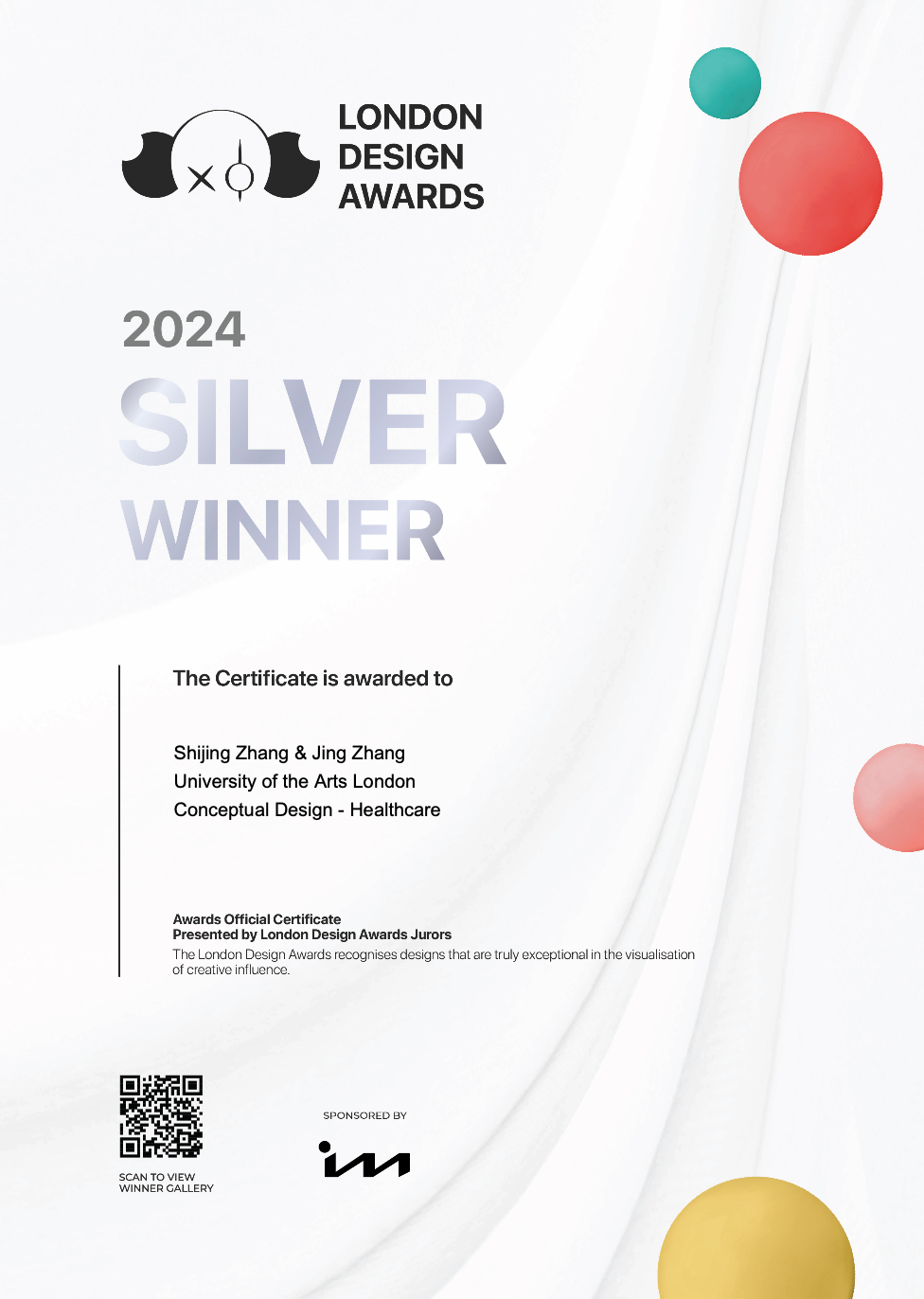
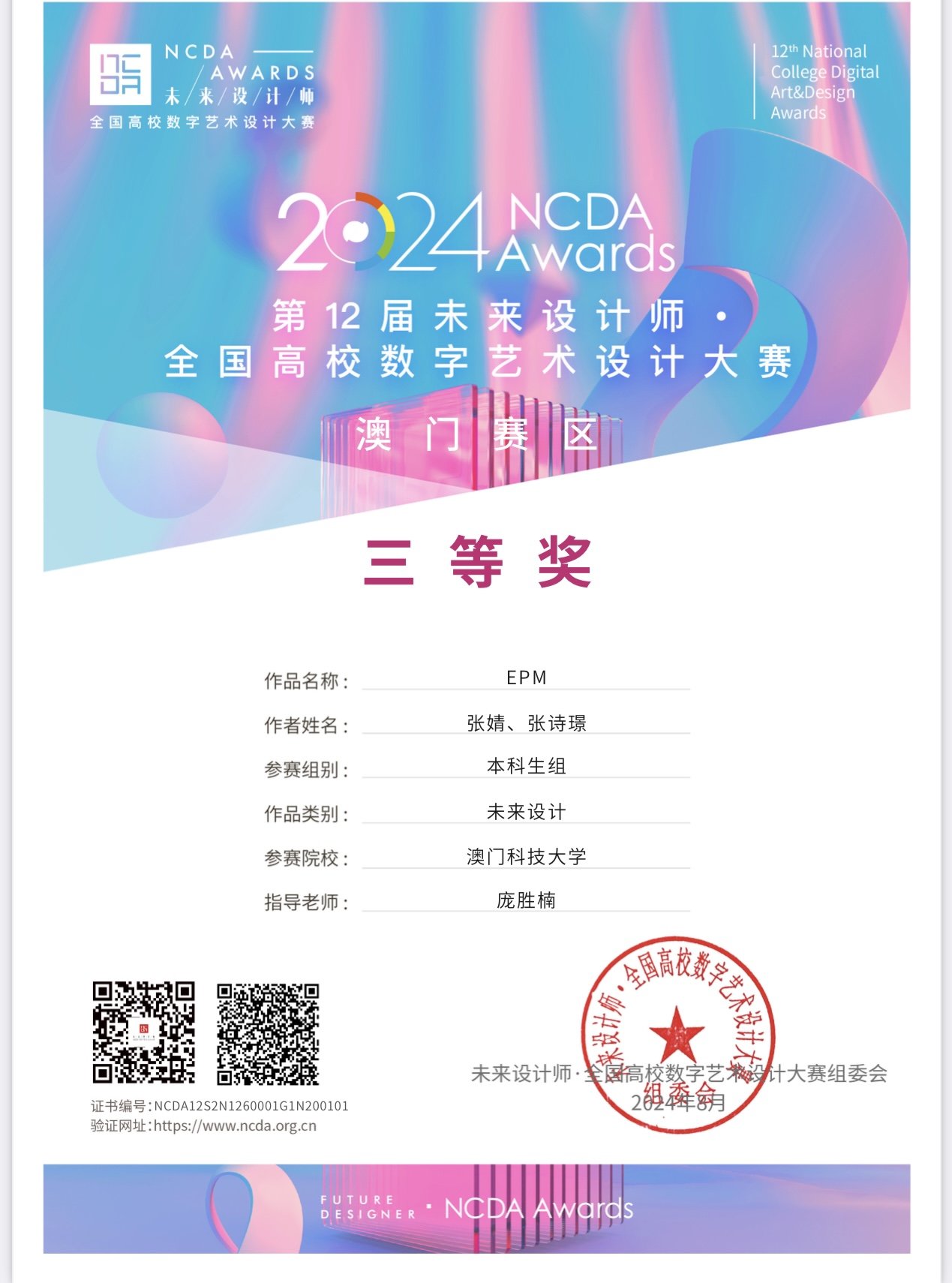
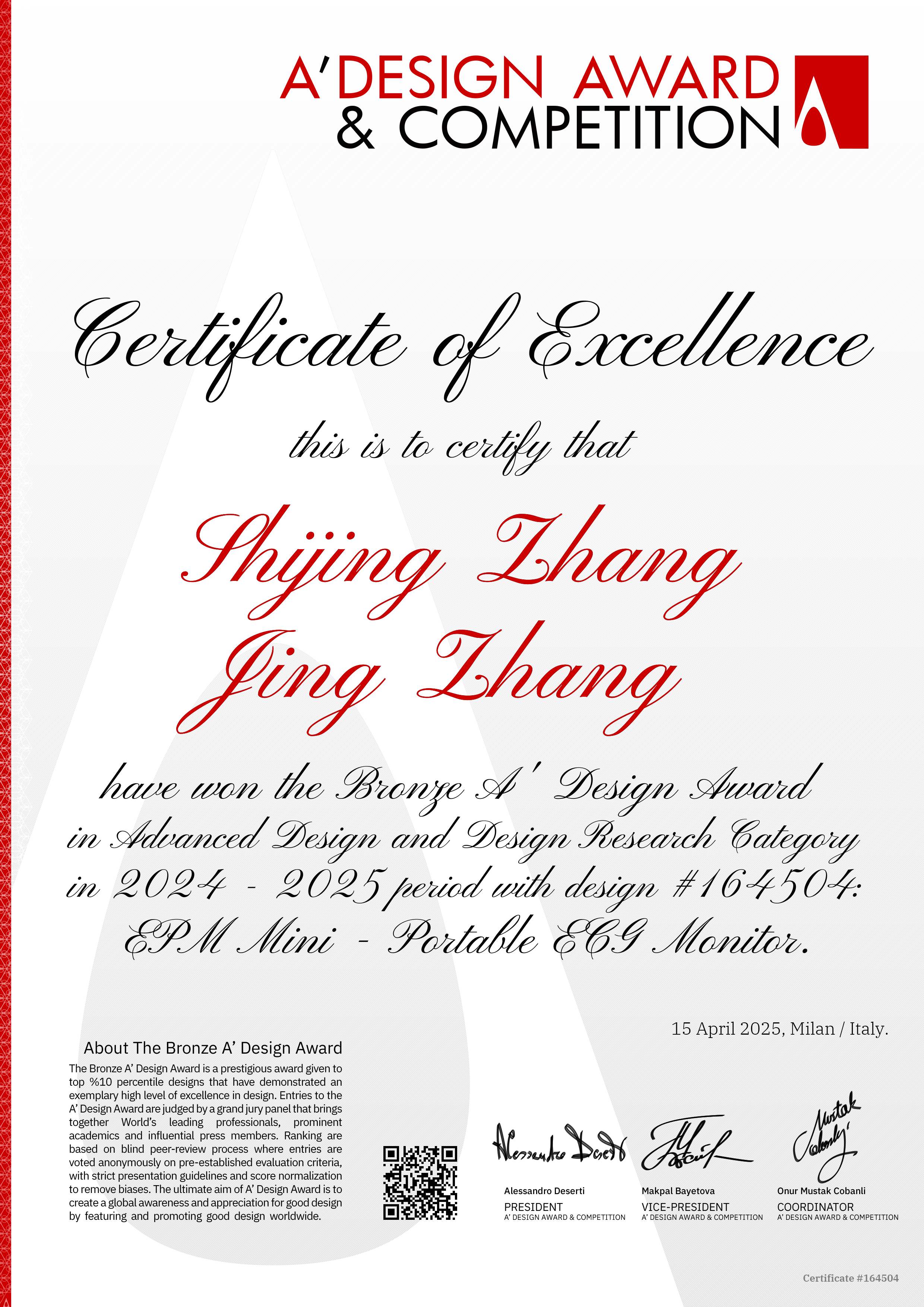
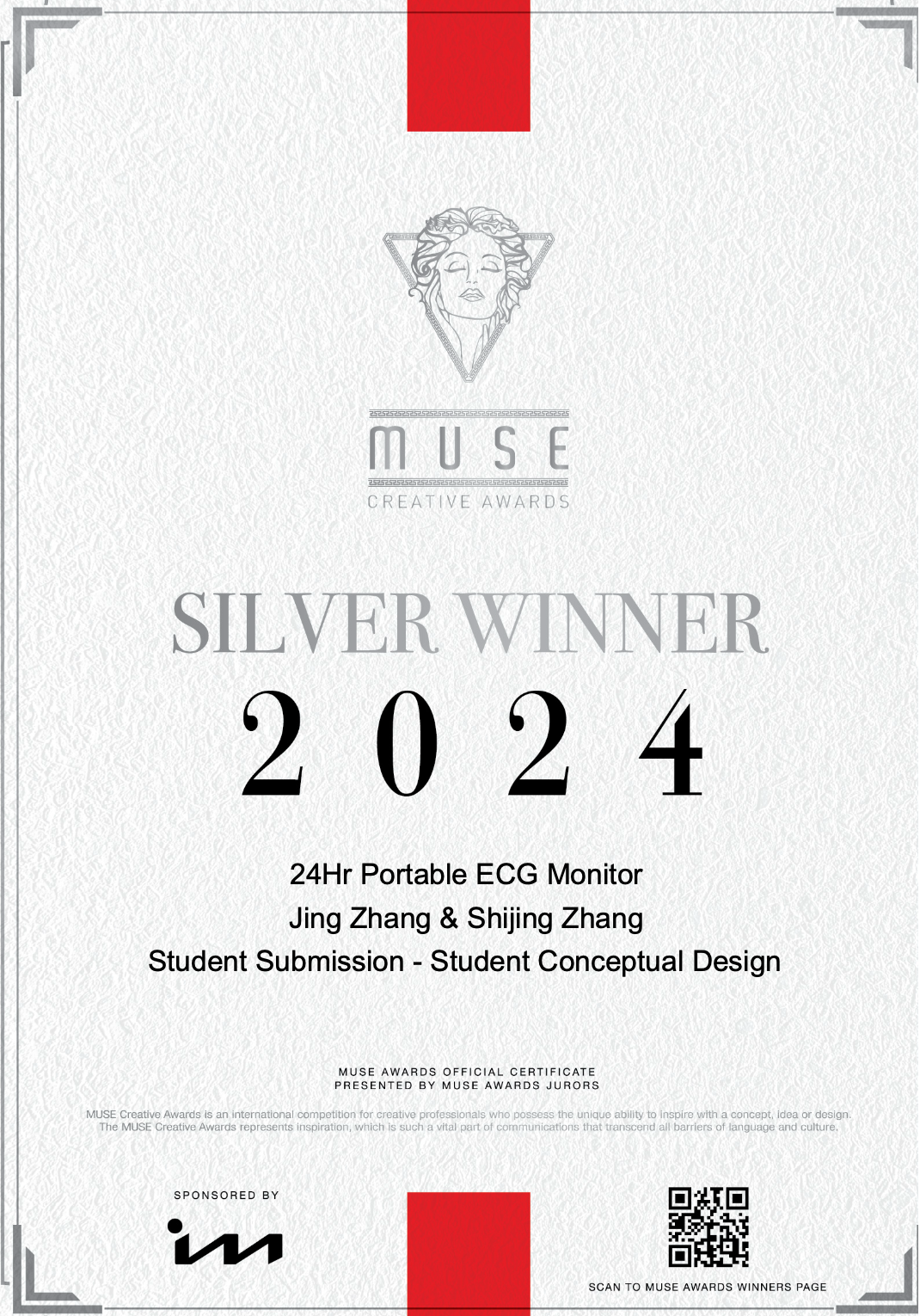
EPM Heart Monitoring Device (Team Project)
Product interaction & Concept Design
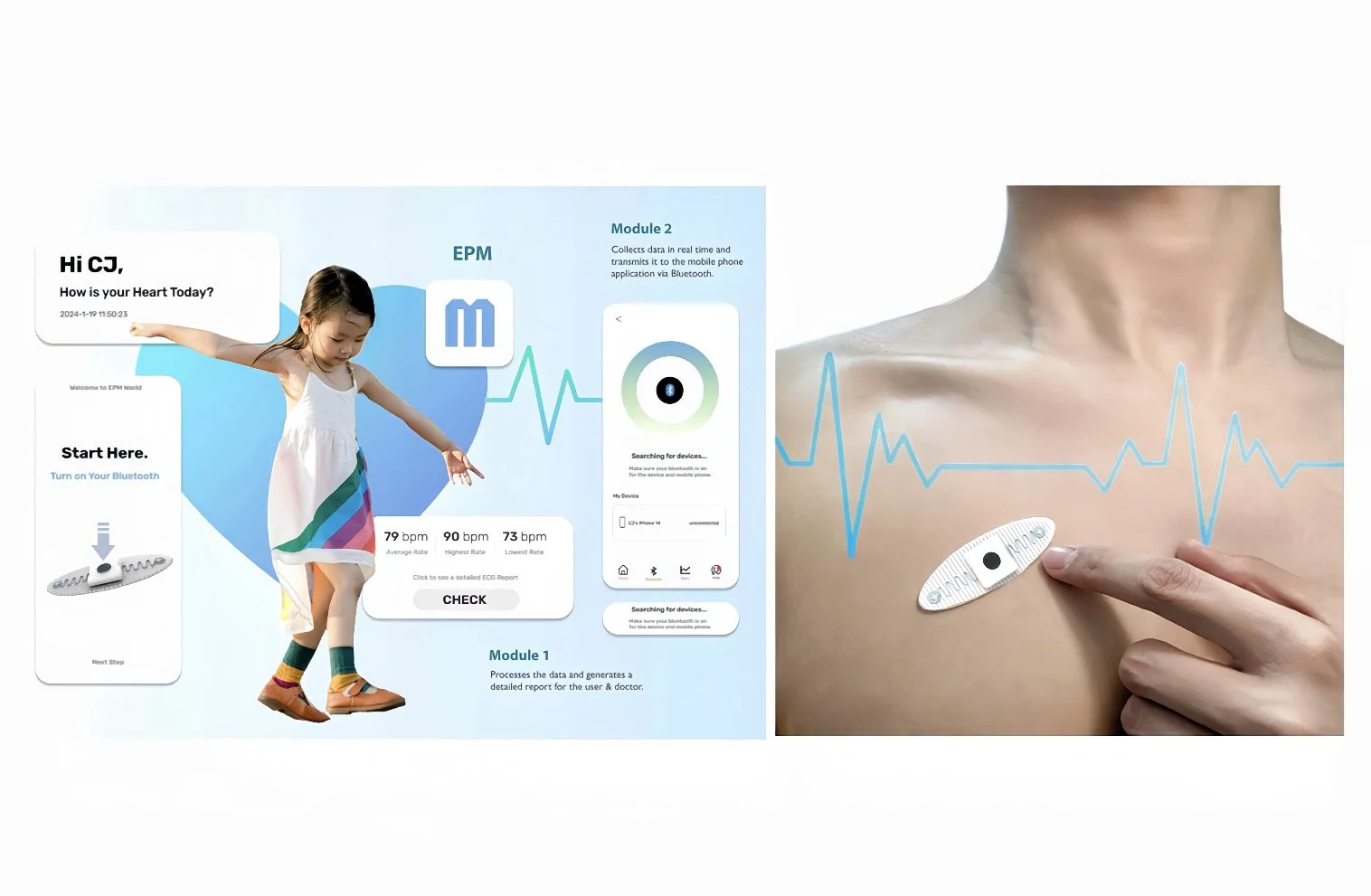
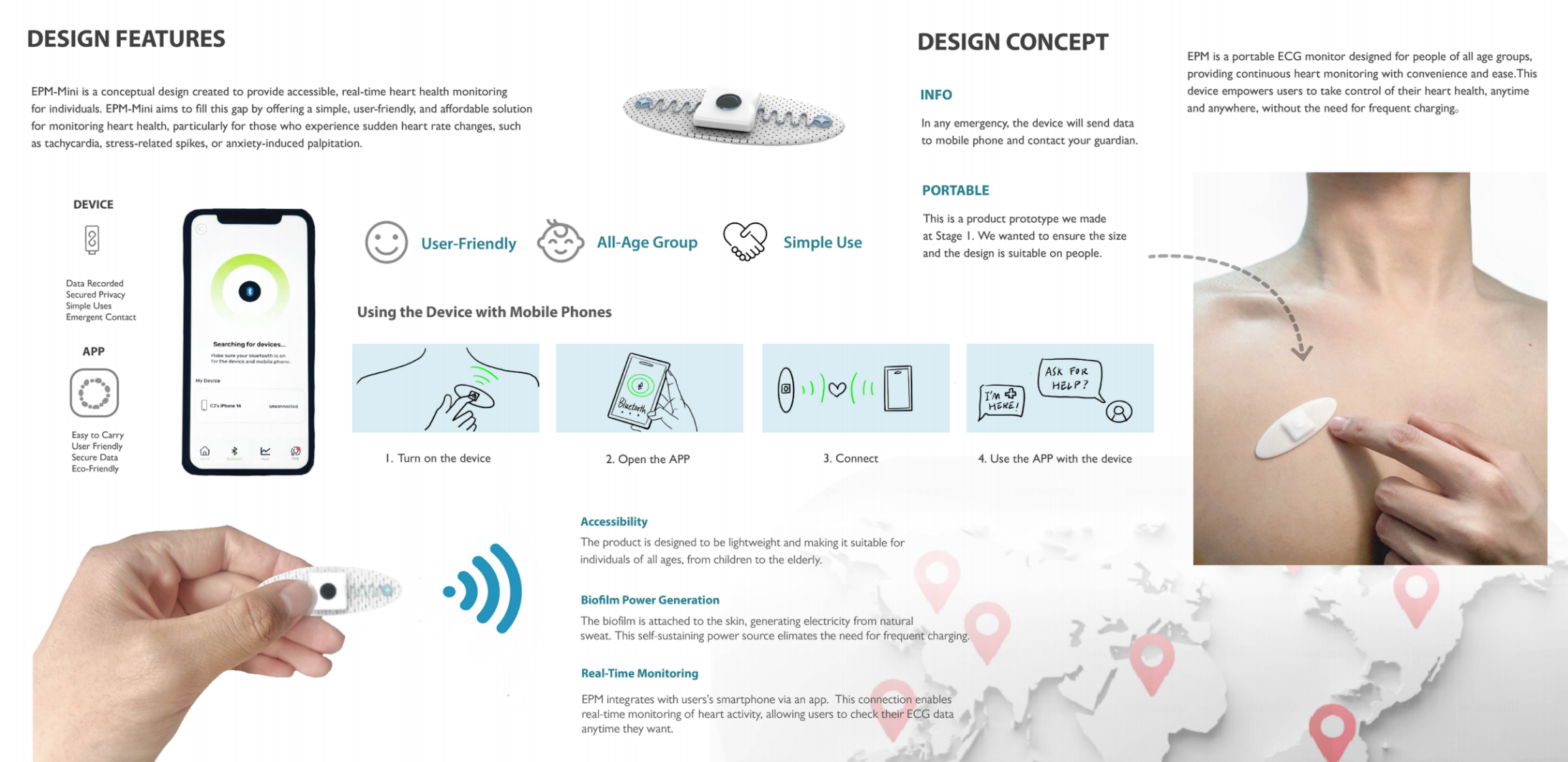
EPM is a portable heart monitoring device designed to help users track their heart health without interrupting their daily lives. The lightweight and easy-to-carry design allows users to monitor their heart condition in real time while working, exercising, or resting.
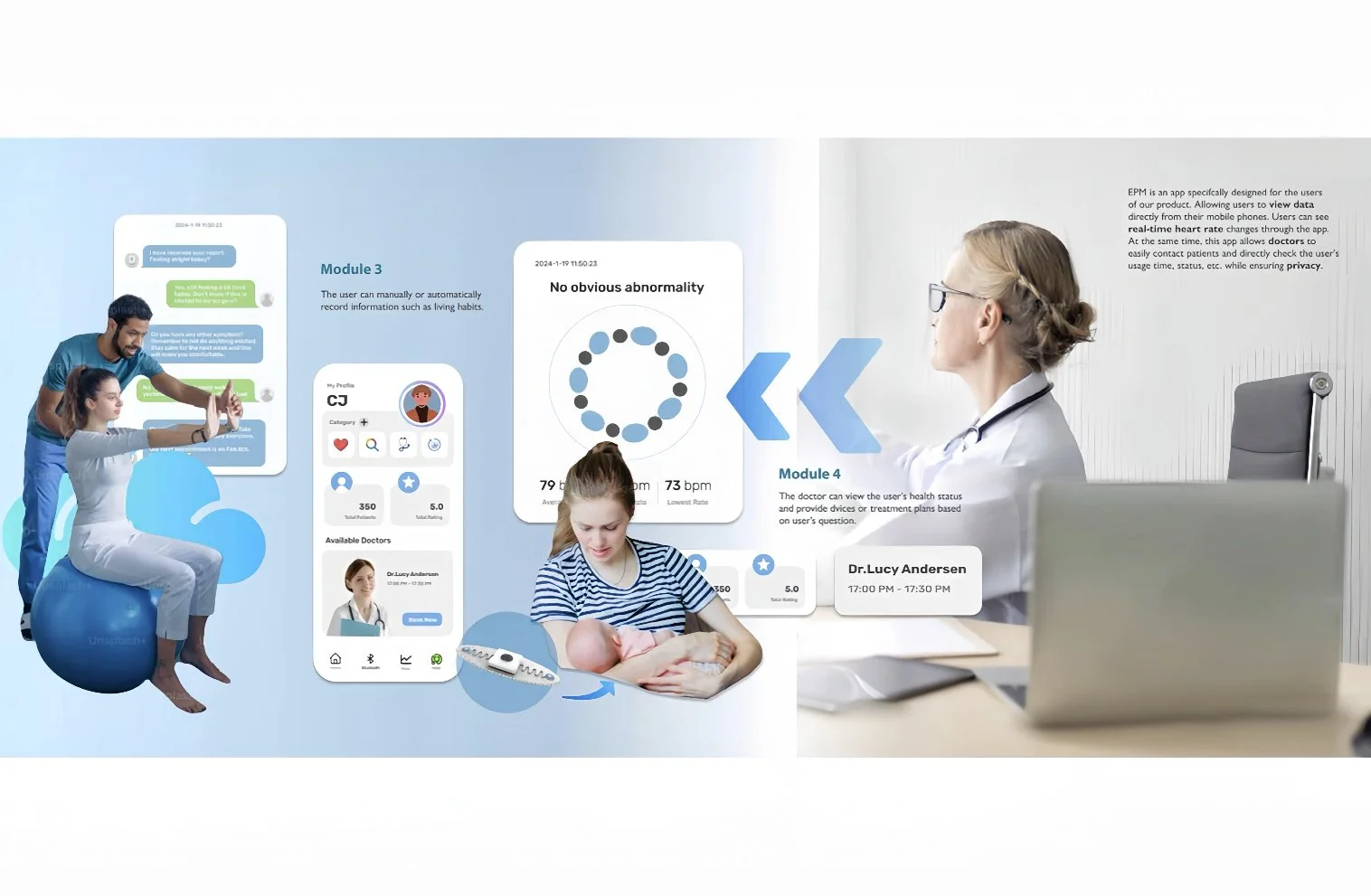
The device connects with smartphones to provide clear and detailed health reports, helping users better understand their physical condition at any time. The project focuses on creating a more convenient and comfortable healthcare experience through continuous monitoring and simple interaction.
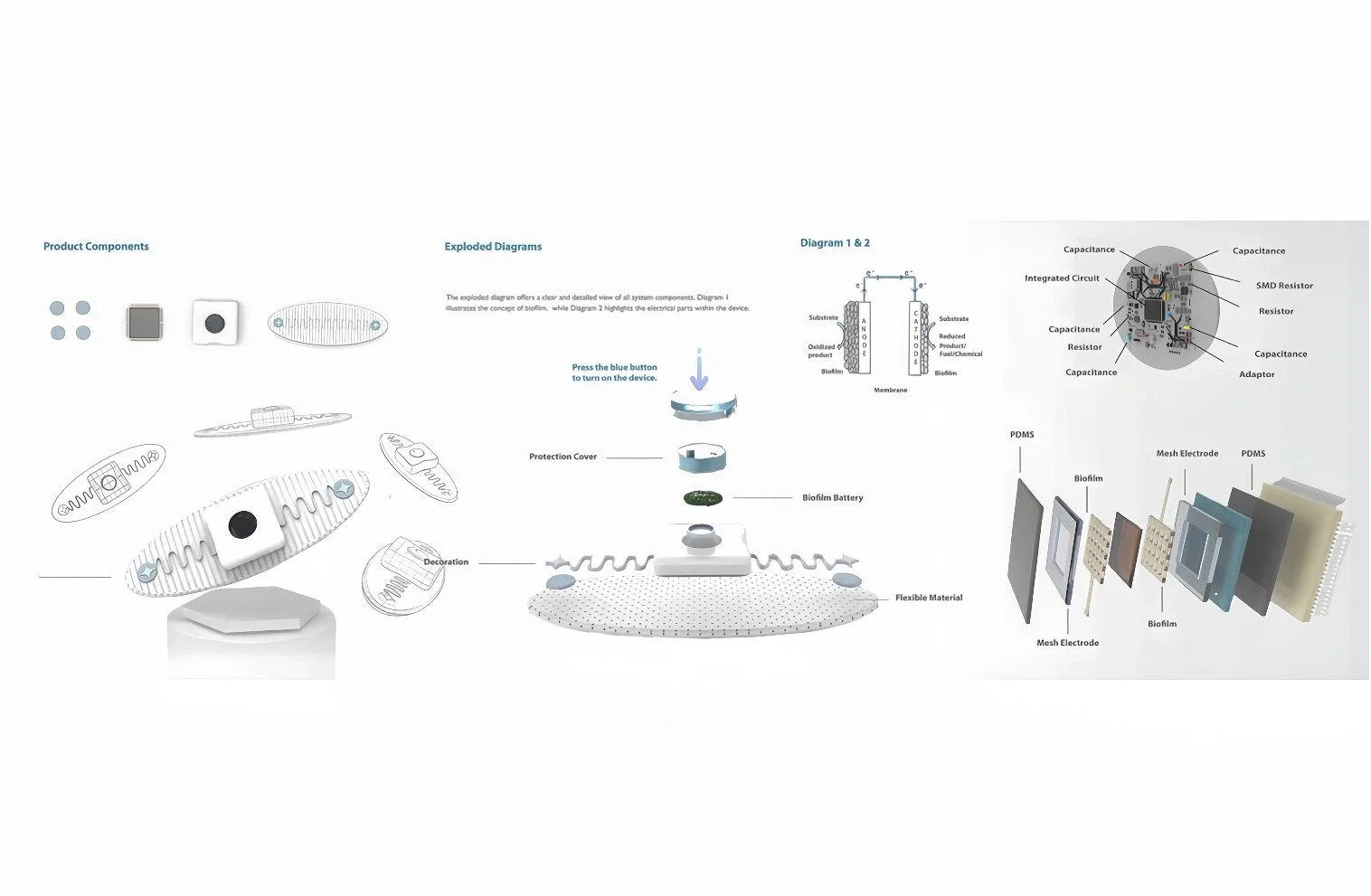
One of the key innovations of EPM is its sweat-powered energy system (essay supported), which allows the device to generate power through the user’s body sweat. This reduces the need for frequent charging and supports a more effortless way to manage personal health.
EPM 心脏监测仪 (小组项目)
产品交互 & 概念设计
EPM 是一款可便携的心脏监测设备,旨在帮助用户在不打断日常生活的情况下持续追踪心脏健康状态。轻便且易于携带的设计,让用户可以在工作、运动或休息时实时监测自己的心脏状况。
设备可与智能设备无缝连接,提供清晰且详细的健康报告,帮助用户随时了解自己的身体状态。项目重点在于通过持续监测与简单交互,打造更加方便、舒适的健康管理体验。
EPM 的核心创新之一是汗液发电(论文支持),设备能够通过人体汗液产生能量,减少频繁充电的需求,让用户能够更轻松地管理个人健康。
Design Process 设计流程
Key Insights
Many cardiac abnormalities are intermittent and unpredictable, making them difficult to detect during short-term clinical examinations.
Existing heart monitoring devices often fall short in comfort and everyday usability, making long-term, continuous heart health monitoring difficult to sustain.
Consumer smartwatches offer convenient heart health monitoring, but their ECG capabilities remain limited compared with dedicated medical-grade devices.
关键洞察
许多心脏异常具有突发性和间歇性,在医院短时间检查中往往难以捕捉。
现有心脏监测设备在佩戴舒适性和日常使用体验上存在局限,难以支持用户进行长期、持续的健康监测。
消费级智能手表提供了便捷的健康监测,但与专业医疗级 ECG 设备相比仍存在监测能力上的局限。
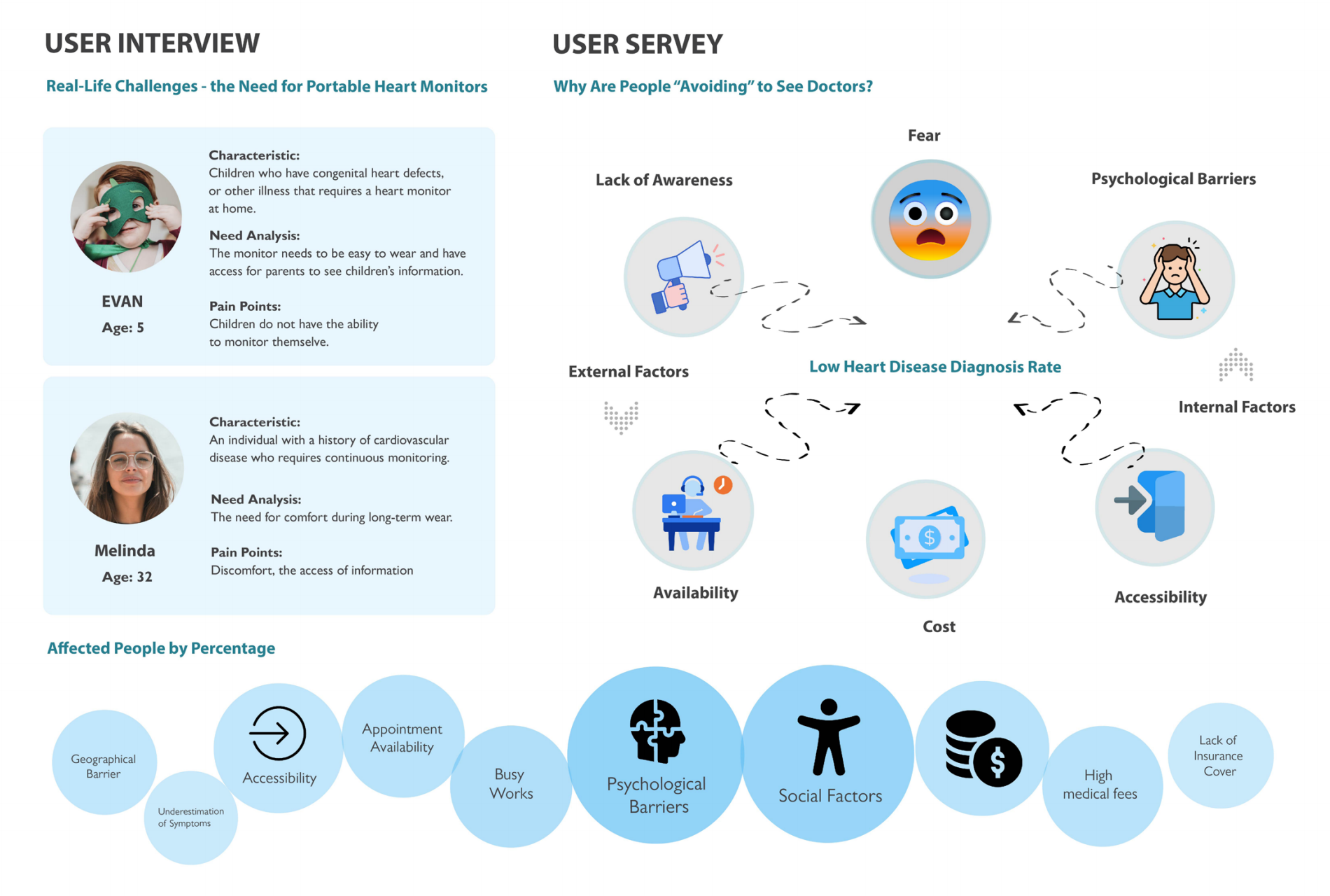
User Survey
User research revealed a gap between health awareness and long-term monitoring behavior. Existing heart monitoring devices are often bulky, uncomfortable, and designed primarily for clinical settings, making them difficult to integrate into everyday life.
用户调研
用户调研显示,健康意识与长期监测行为之间存在差距。现有的心脏监测设备通常体积庞大、佩戴不舒适,且主要面向临床环境设计,难以融入日常生活。
Design Features
Uses a compact, lightweight, and comfortable design to reduce the burden of traditional medical devices, making heart monitoring easier to integrate into everyday life.
Continuously tracks changes in heart activity, improving the chances of detecting intermittent cardiac abnormalities.
Transforms complex ECG data into clear, accessible insights, helping users understand and manage their heart health without requiring medical knowledge.
Explores sweat-powered biofilm technology to reduce charging dependency while demonstrating the future potential of self-powered wearable health monitoring.
Integrates heart monitoring into daily routines, encouraging consistent long-term use and supporting healthier habits.
设计特征
轻量化设计
采用轻巧、舒适的可穿戴设计,降低传统医疗设备带来的使用负担,使心脏监测能够自然融入日常生活。日常化监测体验
将监测过程融入用户生活,无需依赖特定医疗环境,提升长期使用的可能性。实时数据追踪
持续记录心脏活动变化,弥补医院短时间检测难以捕捉突发异常情况的局限。智能健康反馈
将复杂的心电数据转化为直观的信息反馈,帮助用户更容易理解自身健康状态。自供能技术探索
探索汗液生物膜供电技术,减少充电依赖,并展现自供能可穿戴健康监测设备的未来潜力。
Reflection
Through the EPM project, I came to recognize that the value of medical product design extends beyond addressing functional needs, it lies in redefining the interaction between people and devices. Effective cardiac monitoring relies not only on accurate data collection but also on adapting to users' daily habits, emotional states, and real-life contexts. Rather than solely pursuing hardware enhancements, the core of design should focus on lowering the barriers to health management, making long-term monitoring a natural and effortless part of everyday life rather than an added burden.
This project also reshaped my understanding of the designer's role. I realized that impactful design is rarely created in isolation, it emerges through continuous learning across disciplines. By engaging with medical research, engineering principles, and material innovations, I began to see design not as the final outcome, but as a medium for connecting scientific knowledge with human needs and transforming complexity into meaningful everyday experiences.
Special thanks to my teammate Jing Zhang, an Industrial Design student, for leading the product form and industrial design of EPM.
总结
通过EPM项目,我学习到医疗产品的设计价值不仅在于满足功能需求,更在于人与设备之间的互动需求。有效的心脏监测,既依赖精准的数据采集,也需要适配用户的日常习惯、情绪状态和生活场景。相比于持续提升硬件性能,设计的重心应放在降低健康管理的使用门槛上,使长期监测成为一种自然、无负担的日常行为,而非额外负担。
此外,我也认识到具有影响力的设计很少源于单一学科,而是在持续的跨界学习中被不断打磨。通过阅读医学文献、理解工程原理、探索新材料技术,我逐渐将设计视为连接不同知识体系的纽带—它不仅承载技术,也将复杂的科学成果转化为大众能够理解、愿意接受并长期使用的体验。
特别感谢我的团队成员张婧(Jing Zhang)(工业设计专业)负责 EPM 产品外观及工业设计。
